On the benign unprovability of our perception being reality
v2
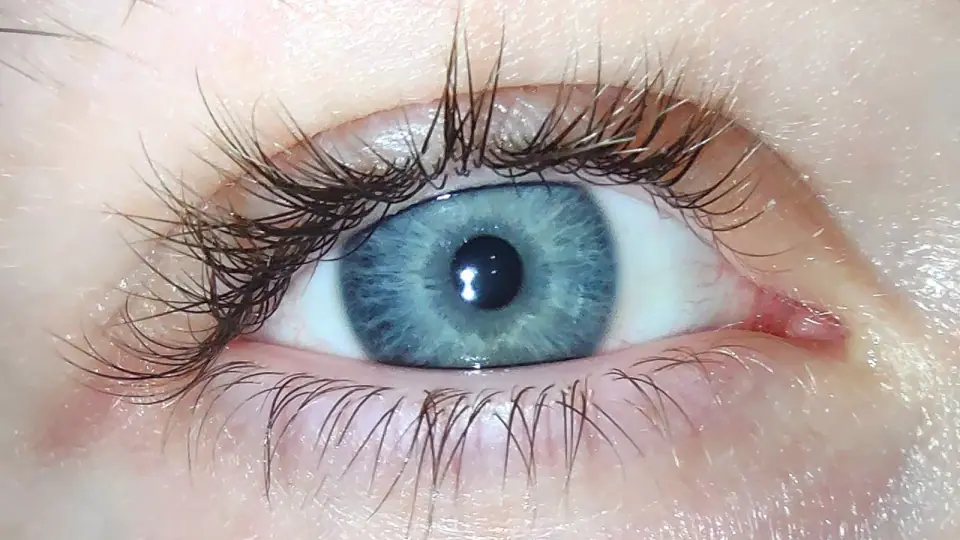

Most of my theories I’ve arrived at alone, laying prostrate on my bed. First in high school summers alone in my room in my parent’s home, then on weekends at uni where I didn’t end up going out and I have the triple room to myself, then postgrad in winter work from home days in the city where I hadn’t anything to do. I can feel the unsolved problems in my subconscious, and when a vacancy in the hubbub of life comes around, they rise to the forefront of my psyche and I feel no choice but to work on them, to think them through. If not to convince others of my opinion, so to at least have conviction in my own stance, and to feel the security that only comes after you’ve thought through your position from the lens of a thousand devil’s advocates.
The subject of this article is the supposition that our lived experience is one wholly defined by verisimilitude, that is to say if you see it, hear it, smell it, etc then it is real. That our perceptions are reality insofar as to being fabricated by our own mind about the natural world around us.
Personally, I believe this is fundamentally impossible to prove.
Not now, nor ever. By being sensual agents, our experience is separated from any kind of reality by a layer of perception. And because one’s perception can’t be perceived by one, there is no way that one can prove that one’s perception of a reality is that reality.
We have five (known) senses (or at least I know I have five). We perceive the world through these senses. Doubting the authenticity of their communication is very inconvenient because they extremely foundational in our understanding of the world from every moment to every moment. Imagine the layers of social conditioning and external forces you would be positioning yourself against by denying or even doubting what your eyes see or your ears hear. We want to, rather almost need to, buy in to the world around us in order to participate in society, to work, play, gather, love, and ultimately survive considering life and death are the only two states of being any of us (or any of me) are actively aware of.
Game development gives you perspectives into the fundamentals of the universe that you might not every have to think about otherwise. If you want to build AI for your game, whether single or multiplayer, you need to decide essentially how omniscient they are. Bots could either know nothing about the world fundamentally and try to explore it from first principles like a human player would, wandering around and trying different things, perceiving using vision and audio. However this is quite difficult to code, as you have to program their senses and their actions upon those senses. More promising approaches to sensory first autonomy have been made by reinforcement learning models like AlphaZero, aka machine learning instead of heuristical or state-machine-like AI. The far easier approach is to make bots omniscient as to the locations of all objects of interest in the scene, be them the player, weapons, powerups etc. Bots also have a mental model of the entire world’s playable space, called a NavMesh, which they essentially need in order to calculate the paths to take to travel from one place to another using A* or Dijkstras or etc.
If you make omniscient AI in a game with human players, you basically created a world with two fundamentally distinct kinds of agents. There are human-controlled agents that perceive the world purely through their visual and auditory senses, and AI controlled agents that have no perception whatsoever and just somehow “know” every everything is, what everything is, how everything is (where “know” here means have access to the fundamental code of the universe in which they live).
Even the human player’s perception isn’t completely that of reality. To save rendering time, you might implement occlusion culling, which is a technique that basically doesn’t render any objects or effects that are outside of the player’s view frustum. If you inspect this effect as it’s running, you’ll see entire parts of the world vanish, reappear, and vanish depending on who is looking at what. This would be akin to the question of if you can’t perceive something, is it really there?
However different the minds of these distinct classes of “people” may be, they are still indistinguishable characters in the same world, subject to the same physics, spatial and temporal limits on their abilities, limits placed on them via game systems etc. As a player, you may not know who is another player and who is a bot because the key differences between these types of agents are in the mind.
In this light we may discuss how the experience of perceiving the world through perception is fundamentally different from doing so through omniscience, which might be different from other modalities that we might not know of.
If you could believe that, then how could you believe that what you experience is real? That is to say, how could you prove from the sights, smells, and other stimuli that reach your mind that you are a real person in a real world with other real people. Without you yourself being able to inspect the way that your perception is generated, you can’t really know how it’s reaching your consciousness.
Without you being able to experience someone else’s mind, you can’t really know if it’s operating in the same modality as yours, that being one of perception. Without you being able to experience someone else’s volition, you can’t know if they are deciding to do what they do in the same manner that you decide. You can’t know if the same things would happen if you were somewhere versus if you were nowhere because in the latter case you would have no way to perceive it.
We all exist in our individual frames of reference. Or at least I know that I do. Fundamentally your consciousness is separated from the apparent world by a layer of perception, and it’s this layer that effectively prevents any individual “I” from being able to prove that there is a “you”.
I’d like to discuss the emotional side of this discussion. I understand that for many people, buying in to the world around them is a necessity, and failing to do so would leave them “purposeless”, in that there wouldn’t be a “point” to doing anything anymore. I would like to unpack this.
What is “point” or the “worth” of doing something, i.e. it’s “worthiness” in this new understanding of life. Even if you believed in the unprovability of reality, you would still know that this is the only reality that you know of that you have any agency in, i.e. you only exist as an agent in the here and now. However agency is entirely coupled to existence, i.e. if you “died” in this reality and no longer existed, you wouldn’t have any agency anymore at least here. Ergo in order for anything’s worth to be defined in your reference frame, you have to be alive in the same reality as it. The contrapositive being that if you ended your life, supposedly because you felt life wasn’t “worth it” anymore, it wouldn’t make any sense because nothing can hold any worthiness to you after you don’t exist any longer because you cease to be an agent.
If we dive a little deeper, the fundamental understanding of the relativity of all of these experiences of reality should beget in you a loosening in the requirement of things to always hold a perceived purpose, aka a loosening of the “should”. Is it always in your best interest as someone voluntarily buying in to the world around you to view everything through the lens of “should”, “point”, “worth”, etc. If you know the duration of your perception of this reality is likely finite, do you always want this experience to be limited to thoughts and actions that are easy to explain the motivation of? If you can’t even prove that other people are real to yourself, for what reason would you confine yourself to actions that you could only prove to said other people that are worthy?
If we are exploring the emotions of this concept, I would like to point out that I think this modality of thought is actually quite freeing to me. In our perceived world, we are inundated with things demanding our full attention, haste, and immediacy. The troubles, overdue deadlines, mustfixes of the world beladening our psyches. What if none of it was really there, what if I the person writing this wasn’t really there, nor the screen you were reading this on, nor the people or walls around you, nor really anything but the small nucleus that is your consciousness powering this grand illusion. What would you do if that were true? I’m not saying anyone should renege on deadlines, but understanding the relativity of thought gives you a wider perspective that you can always fall back on when you are constantly bombarded with stimuli, perhaps stressful ones, that require narrow focus to be perceived as important.
If tomorrow, I wake up and a team of bespectacled scientists pull a heavy visor off of my “true” face, and say good job standing up for yourself in front of your boss there, we the board have determined your soul worthy of ascending into the overworld; the test is complete, you may step out of the chamber; then there is nothing in this world I’m in right now that could have alluded to any of that since until this point I had only my perception to rely on.
Who knows what will happen to you, dear reader, the “I” in your own universe? That is if I could be confident that you’re really there.
This is a revision of the following:
Originally published on Substack. View the source version ↗
Comments